- Home
- Social Initiatives
Social Initiatives
No daughter should walk to the mandap without a father.
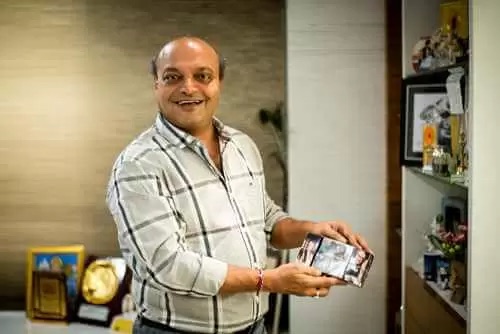
Since 2008, Mahesh Savani has stood in for fathers who are no longer there. He performs the kanyadaan, gives each bride what a family would give, and stays part of her life afterwards. This page explains how the initiative began, how it works, and what each year’s ceremony looked like.
Origin
Twelve days, two daughters, and a decision.
In 2008, a man known to the Savani family died shortly before his two daughters were due to be married. In an interview quoted by IBTimes, Mahesh Savani recalled: “I was very shocked when one of my employees died just 12 days before he could marry off his two daughters… So I decided that I would become their foster father and marry them off. This is how it began.” Other reports describe the man as a relative. All accounts agree on the outcome.
Savani performed the kanyadaan and bore the cost of both weddings. Soon other widowed mothers approached him with the same fear: how to marry a daughter with no father to give her away and no savings to pay for it. “It is challenging for a woman who has lost her husband to get her daughter married,” he later told the Times of India.
Several dozen individual weddings followed. Then came group ceremonies, first reported in 2010 or 2012, and finally an annual December celebration on the grounds of the PP Savani Chaitanya Vidya Sankul in Abrama, Mota Varachha, Surat.
How it works
A father’s role, taken on in full.
Each ceremony follows the shape of a family wedding. This is the process as described in news coverage and by the group.
Families apply
Mothers or guardians of daughters whose fathers have died come forward. A father’s death certificate is required.
Every faith, its own rites
Hindu, Muslim, Christian and Sikh couples marry by their own customs. Nikah ceremonies are held alongside Hindu rites.
A full trousseau
Brides receive gold and silver jewellery, clothes, utensils, furniture and household appliances, estimated at ₹4–5 lakh per bride.
Kanyadaan
Mahesh Savani gives each bride away as her father would. Guests and community figures sometimes share the role, as COVID-19 frontline workers did in 2021.
After the wedding
Festival visits, help with maternity costs and the schooling of the brides’ children, and support if a daughter is widowed.
Year by year
The December ceremonies.
Each ceremony carries a Gujarati name drawn from the language of weddings and daughterhood. Earlier ceremonies were also called Koyaldi, Lagni-na Vavetar and Samvedana, but reports do not tie those names to specific years.
| Year | Ceremony | Daughters | Highlights |
|---|---|---|---|
| 2016 | December ceremony | 236 | Five Muslim brides and one Christian bride; his son Mitul married alongside them. Covered worldwide by AFP. |
| 2017 | 24 December | 251 couples | Hindu, Muslim and Christian couples; support pledged for brides’ maternity costs and their children’s schooling. |
| 2018 | લાડકડી Ladakdi | 261 couples | Six Muslim and three Christian couples; 54 brides had lost both parents. ₹2 lakh insurance cover and a bank account per couple. |
| 2019 | પાનેતર Panetar | 271–300 (reports differ) | Held with the Lakhani family. |
| 2021 | ચૂંદડી મહિયરની Chundadi Mahiyar-ni | 300 | First Sikh bride; 103 brides had lost both parents; kanyadaan performed by COVID-19 frontline workers. |
| 2022 | દીકરી જગત જનની Dikri Jagat Janani | 300 | India Book of Records: 1,38,283 organ-donation pledges. Student adoption scheme launched. |
| 2023 | 25 December | 75 | More than 25,000 attendees; the reported total passes 5,000. |
| 2024 | પિયરીયું Piyariyu | 111 | Brides from 39 communities, including hearing-impaired and differently-abled brides; blessed by Morari Bapu. |
The running total
Five thousand and counting.
Behind every figure is a daughter. The media have tracked the total as it grew, and the reported figures do not always agree. Here they are as published, rather than rounded into a single claim.
| As of | Reported total | Reported by |
|---|---|---|
| 2016 | 472 → 708 | The Better India; Deccan Chronicle / AFP |
| Dec 2017 | 969 | Daily Sabah |
| 2018–19 | about 3,000 | The Weekend Leader; Nspirement |
| Dec 2022 | 4,572 | ANI |
| Dec 2023 | 5,000 | ANI |
| Dec 2024 | 5,274 | Group press release |
Beyond the wedding day
“Not just dowry, but all responsibilities.”
“We provide not just dowry but also bear all responsibilities toward the daughter after marriage,” Mahesh Savani said in 2022. Coverage over the years describes what that means in practice.
Festival visits
The Sydney Morning Herald reported that “Mahesh Papa goes to as many homes as he can” during festivals, visiting daughters in their new homes.
Mothers and newborns
Maternity expenses for the brides were reported as covered in 2017, alongside education for the children born to them.
Security for couples
In 2018 each couple received ₹2 lakh of insurance cover under a Prime Minister’s insurance scheme and a new bank account.
Support for widowed daughters
A December 2022 report said monthly support for widowed women had been raised to ₹7,500. The group describes continuing help for daughters who lose their husbands.
Pilgrimages for mothers
In 2024 and 2025 the group arranged pilgrimages for the brides’ mothers, and in 2025 an Umrah for Muslim daughters and their husbands.
A journey together
Couples have received trips, from a lottery-drawn Singapore trip for ten couples in 2018 to a honeymoon for couples in 2024.
Every faith, one family
A mandap and a nikah under the same sky.
From 2016, when five Muslim brides and one Christian bride married at the ceremony, the weddings have been openly interfaith. In 2021 the first Sikh bride married there. Each couple marries according to its own tradition, with the rites of each faith performed alongside the others.
In 2025 the PP Savani Group and the KP Group of Dr Faruk Patel arranged a pilgrimage for about 300 mothers and an Umrah for Muslim daughters and their husbands. The group reported that 16 Muslim daughters had married at the ceremonies that year. “Through this initiative, we hope to strengthen secular values,” the group said.
“These girls are like my daughters. I am like a foster father to them. It gives me a lot of joy to see them happy.”
Mahesh Savani, December 2017, as reported by Daily Sabah
Sources
- Nspirement, “The Indian businessman who married off 3,000 girls” (Jan 2019), citing IBTimes and the Sydney Morning Herald.
- The Better India (Jun 2016); The Weekend Leader (Sep 2016, Feb 2018).
- Deccan Chronicle and AFP / The World (26 Dec 2016).
- Daily Sabah (25 Dec 2017); DNA (Dec 2018).
- Gujarat Mitra; India.com; Hindi Oneindia (Dec 2021 – Feb 2022).
- ANI / Devdiscourse; CIA Live; TV9 Gujarati; Diamond City News (Dec 2022).
- ANI / Dynamite News (25 Dec 2023).
- The Week / PNN press release; Gujarat First (Dec 2024).
- The Tribune, group statement on the pilgrimage and Umrah (Jun 2025).